Lesson 2. The Message to the Church in Smyrna. An interpretation of the seven messages to the churches from the Book of Revelation (the Revelation of John). Teacher: Dmitriy Leo. Father’s Blessing Church.
The “Revelation to the Seven Churches” School. Table of Contents
Lesson 2. The Message to the Church in Smyrna.
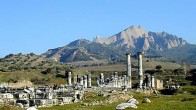
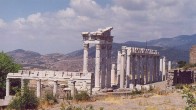
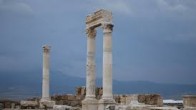
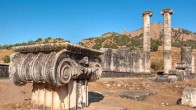
The city of Smyrna – now called “Izmir” is one of the oldest cities in Asia Minor. The city was renowned for its beauty, stone-paved streets, picturesque trees, and Mount Pagos, which, together with the buildings adorning it, rose above the city like a crown.
However, the city’s builders made a serious mistake by failing to install drains on Smyrna’s paved streets. As a result, especially after heavy rain, the streets often turned into streams of water. After suffering various disasters—earthquakes, fires, plagues, and wars—and being devastated by the Lydians, the city was rebuilt by Alexander the Great.
Therefore, Smyrna received two names – “the city of suffering” and “the city of life.” Today, Smyrna has a population of 120,000. Smyrna – means a funeral and aromatic incense. This resin was used in perfumery, ointments, and incense, as well as for embalming the dead.
Rev. 2:8 And to the angel of the church in Smyrna write: These things says the First and the Last, who was dead, and came to life:
“To the angel”—see the previous messages.
“Was dead, and came to life.”
John reminds the Church that the Lord conquered death, and that this victory was also won for them. Knowing how much she had suffered in the past and what she would have to endure in the future, Jesus encourages her. Since Smyrna had repeatedly been destroyed by earthquakes, fires, plagues, and wars, and devastated by the Lydians, yet had survived, Jesus addresses her with encouragement: “To you speaks the One who was also dead, but behold, is alive.”
Rev. 2:9 I know your works, and your tribulation, and your poverty (but you are rich), and the blasphemy of those who say they are Jews and are not, but are a synagogue of Satan.
“I know your works, and your tribulation, and your poverty.”
Tribulation and poverty may literally refer to the condition in which Smyrna found itself as a result of its numerous destructions.
The history of the first Church tells us that, while awaiting the Lord’s soon return, Christians brought all their possessions to the Church and held everything in common (Acts 4:34–37). Thus, when arrested and tried, there was nothing left to take from them; they were poor. But this poverty was nothing compared with the riches they received from God. Perhaps this refers to the tribulation and poverty resulting from persecution by the Jews, whom Jesus called a synagogue of Satan.
“and the blasphemy of those who say they are Jews.”
It is known that Jewish slander was the cause of the first persecution and that Jews consistently incited the Romans against Christians. Calling the Jews a “synagogue of Satan” may indicate that in this case they acted as an instrument of Satan’s struggle against the Church. The word “synagogue” – is literally translated [sunagoge] – “synagogue.”
Rev. 2:10 Do not fear any of the things you are about to suffer. Indeed, the devil will cast some of you into prison, that you may be tested, and you will have tribulation for ten days. Be faithful until death, and I will give you the crown of life.
“Do not fear any of the things you are about to suffer.”
Interestingly, Jesus did not deliver them from these events, but strengthened and encouraged the Church not to fear and to remain faithful until death. Serious persecution lay ahead for the Christians, initiated by the devil himself: “...the devil will...”. Jesus Himself says that He would not be the cause of the Christians’ tribulation, suffering, and death, but that this would be the devil’s work, in order to...
“to test” [peirazo] – to test for genuineness, put to the test, or attempt to seduce.
“and you will have tribulation for ten days.”
It is obvious that the expression “ten days” should be understood symbolically, as the total duration of future persecution.
Persecutions took place: 1) under Nero in 64, 2) under Domitian in 91, 3) under Trajan in 98, 4) under Marcus Aurelius in 177, 5) under Septimius Severus in 202, 6) under Decius in 250, 7) under Valerian in 257, 8) under Aurelian in 275, 9) under Diocletian in 303, and 10) under Maximinus in 311. Thus, it is considered that there were ten persecutions.
The “day = year” principle may also be applied, since the most severe period of persecution occurred during the decade from A.D. 303 to 313—“ten days,” as mentioned in the letter (“day” in prophetic terminology generally means a year; see Ezek. 4:6).
“Be faithful until death, and I will give you the crown of life.”
This may mean that the “conquerors” will not be subject to a second judgment. In Revelation (chapter 7), we later see people in white robes with palm branches in heaven before the throne and the Lamb, and the angel explained that these are “those who came out of the great tribulation”... Even before the Savior’s Second Coming, they all “are before the throne of God and serve Him day and night in His temple.”
“Be faithful until death” may also mean that some prayers for help and protection during a critical time will never receive an answer. For the sake of the crown of life, some will have to remain faithful until death itself.
“And I will give you the crown of life.”
Mount Pagos was a distinctive architectural landmark in Smyrna, shaped like a rising crown above the city. Therefore, it is possible that Jesus was speaking to them about the crown they would receive for their faithfulness and endurance. Jesus may also have been speaking figuratively about the future reward for suffering.
Rev. 2:11 He who has an ear, let him hear what the Spirit says to the churches: the one who conquers will not be harmed by the second death.
“He who has an ear, let him hear what the Spirit says to the churches.”
As we now see, these words are addressed to everyone who hears them (who has ears to hear), and they are intended for many churches, not only this one. Jesus concludes the letter by encouraging the conquerors with the reward they will receive.
“From the second death.”
What does this mean? Apparently, the first death – is the cessation of physical existence. “People are destined to die once” (Heb. 9:27). But those who have not accepted God’s grace and the salvation He has given through His Son will face judgment and eternal condemnation – the second death.
The suffering Church needs to know that, no matter how great the suffering, the Church will remain alive. Just as the risen Jesus came to life, and as the once-destroyed city of Smyrna was rebuilt, so those who overcome will be delivered from the second death.
The Lord makes not a single reproach against the Church in Smyrna, but only says, “I know your tribulation,” and promises to give “the one who overcomes” “the crown of life,” so that he “will not be hurt by the second death.” “The Lord rose again, and so the martyrs for Him will triumph over death (Swete).”
End of lesson.
Source: Father’s Blessing Church
Teacher: Dmitriy Leo