Lesson 5. The Message to the Church in Sardis. Interpretation of the seven messages to the churches from the Book of Revelation (the Revelation of John). Teacher: Dmitriy Leo. Father’s Blessing Church.
“Revelation to the Seven Churches” School. Table of Contents
Lesson 5. The Message to the Church in Sardis.
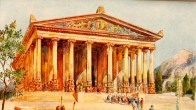
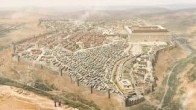
Sardis was founded in 1150 BC and was a large, wealthy city and the capital of the Lydian Kingdom. Sardis was fabulously rich. The Pactolus River flowed through the lower city; it was once very rich in gold, and most of the city’s wealth came from it. Sardis was known for its art and craftsmanship and was the first center for minting gold and silver coins.
A major earthquake in AD 17, which occurred suddenly at night, destroyed Sardis physically and financially. The Romans gave 10,000,000 sesterces to aid the devastated city. This shows the scale of the destruction, but the city was never rebuilt. Its glory passed into the past. Sardis, once alive, had now become a dead city.
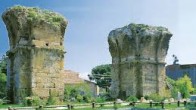
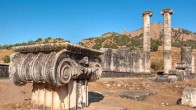
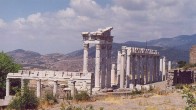
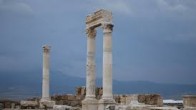
Today, only the insignificant village of Sart remains here, surrounded by ruins; piles of walls, cornices, capitals, and columns testify to the ancient city that once flourished.
Rev. 3:1 And to the angel of the church in Sardis write: These things says He who has the seven Spirits of God and the seven stars: I know your works; you have a name that you are alive, but you are dead.
“To the angel.” See the previous messages.
“He who has the seven Spirits of God and the seven stars.”
He holds the seven stars, which speaks of His supreme authority over the Church. He has the seven spirits, in the fullness of whose perfection He will rule the earth. The One who has the fullness of power and authority over the church is speaking to you.
“I know your deeds; you have a reputation for being alive, but you are dead.”
“Sardis” means “those who have escaped death” or “remnant.” Jesus says that the name of the city where you are does not correspond to your spiritual condition. The city has been destroyed many times, but it is still alive, while you are spiritually dead in its midst. Jesus points out that the church bears the name of being alive, but is actually dead.
Sometimes we think that whatever a church is called, that is how it will live. But regardless of the city in which the church is located today or what it calls itself – this does not determine its significance and maturity in Jesus’ eyes.
Following the example of the church in Sardis, we may call ourselves whatever we want before others (on television, in newspapers, from the pulpit), but Jesus knows the church’s true spiritual condition in the natural and spiritual realms. Therefore, it is better not to think too highly of ourselves or say too much, but to be more humble. This is true and applies to every Christian personally, and Scripture speaks about it. (Rom. 12:3; Mark 9:35; 1 Pet. 5:5.)
Rev. 3:2 Be watchful, and strengthen the things which remain, that are ready to die; for I have not found your works perfect before My God.
“Be watchful, and strengthen the things which remain, that are ready to die.”
Literally, it says: “Be watchful and strengthen those who are close to death.” Because of a literal interpretation of this passage, without examining the original language, some have interpreted it incorrectly. Jesus could not have told His church, “Stay awake, guys, and keep dying.” The word [sterison], translated “strengthen” –, does not refer to speech but to strengthening, supporting, and establishing a person. Jesus calls them to be watchful and strengthen (save) those who are already almost spiritually dead. He is saying something like: “Sardis, do not sleep, and save the church while there is still time.”
“Perfect.”
The word does not mean perfection at all; rather, the word [pepleromena] is more accurately translated – as completed, finished, done, or fulfilled. It seems that the church in Sardis only spoke about being alive, but did nothing it was supposed to do. Jesus is speaking about something that should have been fulfilled by the church but was not. Sardis – you did not do what needed to be done.
Rev. 3:3 Remember therefore how you have received and heard; hold fast and repent. If therefore you will not watch, I will come upon you as a thief, and you will not know what hour I will come upon you.
Before we discuss the beginning of this verse in more detail, let us see what Jesus meant by the expression: “I will come upon you as a thief.” Jesus speaks to the church in language that was understandable to them at that time.
The seemingly impregnable fortress of Sardis was unexpectedly captured by the enemy twice during wartime, under cover of night. They grew complacent and did not even imagine the mortal danger they faced.
Sardis stood in the middle of the flat valley of the Hermus River. To the north stretched the Tmolus mountain range, from which hills extended like spurs, forming a narrow plateau. The original city of Sardis stood on one of these spurs, about 500 meters high. This location made it almost inaccessible.The slopes of the mountain range were steep and smooth, and the city could be approached only where these spurs joined the Tmolus range; even there, however, the slopes were steep and difficult. Sardis was called a giant watchtower guarding the Hermus Valley.
Croesus began a war with the Persian king Cyrus, and this brought an end to Sardis’s greatness. Cyrus began the siege of Sardis, waited two weeks, and offered a special reward to anyone who found an entrance into the fortress. The rock on which Sardis stood was loose; it was more like compacted, dried mud than rock. Cracks formed in it.
Then a Persian soldier named Hyeroeades happened to see a Sardian soldier drop his helmet over the fortress wall, then climb down the cliff and retrieve it. Hyeroeades realized that there must be a crack in the rock that an agile person could climb, and that same night he led a Persian detachment up the fissure in the rock. When they reached the top, they found the fortress wall completely undefended.
The Sardians considered themselves so secure that they believed they did not need any guard at all, and so Sardis fell.
But then history repeated itself. After the death of Alexander the Great, there were many contenders for power. Antiochus, who became ruler of the region that included Sardis, fought a rival named Achaeus and besieged him in Sardis. The siege had already lasted about a year when a soldier named Lagoras repeated Hyeroeades’ feat; at night, he climbed the steep cliff with a detachment of brave men. The Sardians had forgotten the lesson of the past; there were no guards on the walls, and thus Sardis fell again because it was not watchful. (Barclay)
Jesus Christ warns: Sardis, “Be watchful and repent,” or the fate of your city will overtake you.
“Remember, therefore, what you have received and heard, and hold fast.”
This passage can be translated more precisely as: “Therefore remember how you received it and how you heard it.” It may refer to circumstances in which they received something and were supposed to do something, but failed to do so. This is a difficult expression because it concerns events unknown to history.
“Repent”
Jesus again calls the Church to repent and do what they were supposed to do. This means there was a way out; not everything had been lost, and everything could still be put right. The Church needed to deal with something.
Rev. 3:4 Nevertheless, you have a few people in Sardis who have not defiled their garments, and they will walk with Me in white garments, because they are worthy.
“Will walk”
Jesus speaks of it as an accomplished fact. What is interesting is that these people still have a long life ahead of them and will most likely make further mistakes and commit further sins. Yet Jesus says that this right is already guaranteed to them.
Perhaps this refers to people who have been born again, clothed in garments of righteousness, whose names have already been written in the Book of Life. But what about the others in the Church in Sardis who are not worthy to walk with Jesus in white garments? Jesus called them dead because they failed to do something that was required.
As I wrote a little earlier, it is not known exactly what this refers to. But it was something greater and more serious than even the deeds of the Nicolaitans, food sacrificed to idols, sexual immorality, or Jezebel’s deception. Something much worse existed in Sardis, leading to the defilement of their garments (righteousness) and causing the Church to become dead.
Since no historical information has survived on this matter, we would like to offer you four theories concerning the problem in Sardis. Decide for yourselves which one is correct.
Here are the theories.
The Church became completely immersed in the world and abandoned Christian principles and teaching, replacing them with human reasoning, discussions, or myths. Eventually, Christian values disappeared into oblivion. As a result, it became a dead church, with only a few faithful people remaining who continued to be true followers and disciples of Christ.
There is a theory that the church may have participated in the worship of Cybele. Sardis had a huge and magnificent temple of Cybele. Cybele and Attis were worshiped through a ritual in which a person was rejuvenated by receiving the life force of a sacrificed bull. The bull was slaughtered above him, and the person bathed in its blood. You could not claim to be alive unless you had received the life force of the bull.
For some reason, the church stopped leading people through the prayer of repentance and receiving Jesus as their personal Lord and Savior, replacing these truths with some heresy that brought defilement. Thus, the church consisted mostly of dead, not-born-again Christians whose names were not written in the book of life. This is why Jesus called it a dead church; only a few were alive—those who had not defiled their garments and were worthy to walk with Jesus in white garments.
“Have not defiled their garments.”
The word “defile” [miaino] is used only four times in the New Testament. And the Epistle to the Hebrews explains what can defile the Church.
Hebrews 12:15–16 Watch carefully lest anyone fall short of the grace of God; lest any root of bitterness springing up cause trouble, and through it many become defiled; lest there be among you any sexually immoral person or profane person who, like Esau, gave up his birthright for one meal.
The word “profane” [bebilos] – can also be translated as defiled, unfit, or worthless. Thus, a root of bitterness can defile many in the Church. Sexually immoral and profane people (the defiled) should not be in the Church.
Perhaps the church became defiled and dead because it permitted (legalized) sexual immorality and other illicit sexual relations in the church. Perhaps the church leaders allowed this or participated in it themselves. History confirms this. The concept of love was often distorted, and some “Christians” believed that love had to be demonstrated through actions. On this basis, “sects” arose whose meetings ended with the lights being turned off and sexual immorality taking place.
Revelation 3:5 The one who conquers will be clothed in white garments, and I will never erase his name from the book of life, but will confess his name before My Father and before His angels.
Revelation 3:6 The one who has an ear, let him hear what the Spirit says to the churches.
“The one who has an ear, let him hear what the Spirit says to the churches.”
As we can now see, these words are addressed to everyone who hears them (has ears to hear), and they apply to many churches, not only this one.
Although this is the shortest epistle, it is the most difficult to interpret because it contains very few details. But even from what we have learned above, we can draw some conclusions.
We should not think too highly of ourselves or declare, “I am alive,” “I am better...” or “I am more spiritual...” than others. It is better and safer to be more humble and modest in our statements. God opposes the proud but gives grace to the humble. There are truths of the utmost importance in a person's life, and the Church must follow and fulfill them: repentance and receiving Jesus as one's personal Lord and Savior.
Baptism in water and in the Spirit. Communion and other things. The Church should resemble the Church. The Word of God should be preached there, sin should be exposed, the name of the Lord glorified, prayers for people offered, and so on.
If a church turns into an organization where people no longer pray for the sick, teach from the Word of God, glorify Jesus, and so on, but instead engage in various projects, business, social programs, or distributing products, then it has no right to call itself a Christian church.
If sexual immorality and those who practice it are encouraged or tolerated in a church, and church members or leaders engage in and live comfortably in such things, then, according to Hebrews 12:15–16, this is defilement for many. This is a dead church.
End of lesson.
Source: Father’s Blessing Church
Teacher: Dmitriy Leo