Lesson 4. The Message to the Church in Thyatira. An Interpretation of the Seven Messages to the Churches from the Book of Revelation (the Revelation of John). Teacher: Dmitriy Leo. Father’s Blessing Church.
School of “Revelation to the Seven Churches.” Table of Contents
Lesson 4. The Message to the Church in Thyatira.
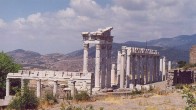
Thyatira – a small Muslim city that traded in purple cloth, that is, wool dyed crimson, bright red, or purple. In ancient times, purple was a very valuable crimson-colored dye obtained from the so-called “purple snail.” Lydia, a seller of purple cloth (Acts 16:14), came from Thyatira.
The city of Thyatira was famous for its copper-smelting furnaces. Thyatira had no particular religious significance. It was neither a center of the imperial cult nor a center of any Greek cult. The only religious attraction in Thyatira was a shrine where a woman –, the prophetess and oracle Sambatha, foretold the future to people.
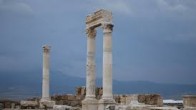
The city is surrounded on all sides by cemeteries, and ravens, attracted by the smell of corpses, flock there in such numbers that they obscure the sunlight. A sad and disturbing sight for a traveler! Today, a settlement of 7,000 people called “Ak-Hissar,” meaning “White Fortress,” stands on its site.
Rev. 2:18 And to the angel of the church in Thyatira write: These things says the Son of God, who has eyes like a flame of fire, and His feet are like fine brass:
“To the angel.”
“Who has eyes like a flame of fire, and His feet are like fine brass.”
The word [halkolivanon] means – pure copper, something resembling gold ore. The city of Thyatira was famous for its smelting furnaces, so the Lord uses familiar images of fire and glowing copper and bronze. The Lord speaks to them in terms they understand: “Thus says the One like a refiner’s fire, whose feet are like the purest copper.”
Rev. 2:19 I know your works, love, ministry, faith, and perseverance, and that your last works are greater than the first.
According to Jesus, the church had works, faith, and, most importantly, the “love” that the church in Ephesus had abandoned; it even had progress and growth in ministry: “your last works are greater than the first.” From this, apparently, we may conclude that at first glance the church in Thyatira was strong and prosperous.
Rev. 2:20 But I have a few things against you, because you allow that woman Jezebel, who calls herself a prophetess, to teach and mislead My servants into sexual immorality and eating things sacrificed to idols.
“You allow … to teach.”
This Jezebel wielded such great influence in the church in Thyatira that the church learned certain things from her. It was the church itself that allowed this teaching to exist.
Every church is responsible for the teaching it follows, what it accepts and what it rejects. It is especially dangerous to learn something from the “world” and apply it in the Church.
“Jezebel, who calls herself a prophetess.”
We know that Jezebel – a worshiper of the pagan gods Baal and Astarte – used all her strength to turn Israel away from faith in the living God and lead it into serving dead gods. It may even be that the prophetess in Thyatira was Jewish, because in antiquity many Jews practiced this craft – predicting the future.
“Jezebel” in the church in Thyatira, as in all other churches, misled the Lord’s children by preaching false teaching and leading believers away from the living Christ to pagan concepts and a pagan way of life.
The Church must be the pillar and foundation of the truth (1 Tim. 3:15). The Church must not imitate this pagan world and use its ideas and teachings; rather, it must bring true teaching into this world. We must not build our teachings on the revelations and books of this world; instead, the world must change its thinking according to what is written in the Bible.
“One of Thyatira’s attractions was an oracle – the prophetess Sambatha, a prophetic woman. It was from this Sambatha that the corrupting influence on the church in Thyatira came” (Barclay)
“She must have been connected with the cult of the Sibyl or with Jewish magic and exerted influence over the city’s trade guilds. Apparently, she taught that Christians should join these guilds and participate in the city’s festivals” (“Thomas; Mounse”)
From the inscriptions unearthed, we know that there were many craft guilds there—something like cooperatives—which people in particular trades joined to protect their commercial and everyday interests: fullers, tanners, bronze workers, spinners, dyers, potters, bakers, and slave traders. This, apparently, was what made things difficult for the church in Thyatira.
To refuse to join such a guild meant giving up all respect and support in business circles. They held communal meals, very often in a temple; and even when they were not held in a temple, they began and ended with a formal sacrifice to the gods, while the meat served as food was therefore meat sacrificed to idols.
Moreover, such communal meals often turned into drinking parties and drunken revelries that corrupted morals.
“Sacrificed to idols.”
Meat sacrificed to idols was one of the Church’s major problems, and Christians faced it every day.
When a sacrifice was offered in a Greek temple, only a small portion of the meat was burned on the altar; sometimes it was merely a tuft of hair taken from the animal’s forehead. The priests received part of the animal’s meat as a kind of tip or incidental income, while the person offering the sacrifice received the rest. With this meat, he could hold a feast with friends within the temple.
In this case, the invitation would sound like this: “I invite you to dine with me at the table of our lord Serapis.” Or he could take the meat home and hold a feast there.
This was a problem for Christians: could a Christian eat meat sacrificed to idols in a temple—or anywhere else?
Another problem was that the priests in the temple could not eat all the meat they received, and therefore resold a good portion of their share to butcher shops—and it was the best meat. Paul discusses this problem in his First Epistle to the Corinthians. (Barclay)
There was a strong tendency, led by a woman named “Jezebel,” which, in the interests of the trade and commercial prosperity, advocated compromise with worldly standards of living,
asserting, without a doubt, that God would be able to protect them from all defilement.
The prohibition against eating meat sacrificed to idols had one far-reaching consequence. It deprived Christians of opportunities to associate with non-Christians, so they could participate with pagans in only a few public events and feasts.
This meant that a Christian could not become a member of any guild, because all guilds held such communal meals, which could well take place within temple walls and consist of meat sacrificed to idols. And not joining a guild was tantamount to professional suicide. (Barclay)
Rev. 2:21 I gave her time to repent of her sexual immorality, but she did not repent.
“I gave her time to repent.”
The Lord knocks on the hearts of those who corrupt society in order to save them. He gave this woman in the spirit of “Jezebel” a chance to repent, but she did not come to her senses or repent. This means that “Jezebel” already knew that what she was doing was sin. Jesus says that she had an opportunity to repent, meaning that He sent dreams into her life, righteous people with a word of truth, or other circumstances in which He convicted her heart of this sin.
“Gave her time” – indicates that the Lord appoints a specific time for a sinner to repent, during which they must make a decision. If that time runs out and they do not come to their senses or repent, events will then unfold quite differently.
Some people answer us when they hear the Gospel, ... “It is too early for me” ... saying that they will live life for their own pleasure and then repent in old age and come to God. The Church must tell sinners the truth: God is knocking on their hearts now, but it will not always be this way. Everyone is given a time of grace so that they have time to repent. Jesus gave Jezebel time –, which means that a specific period of time has been appointed.
Rev. 2:22 Indeed, I will cast her onto a bed, and those who commit adultery with her into great tribulation, unless they repent of her deeds.
“I will cast her onto a bed.”
Because “Jezebel” did not repent within the time allotted to her, great tribulation now enters her life, probably in the form of a serious illness that will confine her to bed. “Bed” [klinon] – means bed, couch, or resting place. The word “cast” [ballo] means – to throw, to take and cast down. The phrase indicates that someone will exert effort to take her and cast her onto a bed.
“And those who commit adultery with her into great tribulation, unless they repent.”
Now the opportunity to repent is given to those who follow her teaching, and if they also do not repent, they will be cast into great tribulation [flipsis] –—oppression, pressure, tribulation, torment, affliction.
Rev. 2:23 And I will strike her children dead, and all the churches will know that I am He who searches hearts and minds; and I will repay each of you according to your deeds.
“And I will strike her children dead.”
In Thyatira, “Jezebel,” in the form of a partly pagan teaching, gained followers whom Christ calls “her children,” and whom He will strike.
“and all the churches will know”.
This error or teaching will become known and conspicuous because, when the judgments come, all the other churches will see it and then understand that it was heresy. This prophetic word of Jesus says that He will openly deal with those who preach false doctrine and lead believers away from the living God to pagan concepts and a pagan way of life by participating in their festivals and feasts. This is sexual immorality and eating sacrifices offered to idols.
“that I am He who searches hearts and minds; and I will give to each of you according to your works.”
What exactly must the churches understand in the future? Jesus searches hearts and minds and rewards each person according to what they do.
Some Christians see Jesus – only as merciful, permissive, and kind, smiling with a lamb in His arms. And that is true, but here Jesus Himself tells the church that it still has something to learn about Him—something it did not know before: that He tests and examines the thoughts and deeds of “each” Christian and rewards each one accordingly.
Christians living in sin often think that the church only condemns them and does not love them, and that only Jesus loves and forgives them. And this is true, but Jesus also wants us not to forget that He will examine and reward each person according to what they do. Here is another confirmation of this.
Rev. 22:11–12 Let the one who does wrong continue to do wrong; let the one who is filthy continue to be filthy; let the righteous continue to do right, and let the holy continue to be holy. Behold, I am coming soon, and My reward is with Me, to give to each one according to his works.
And let all the churches understand (Rev. 2:23) – that He is the Lord who examines and rewards.
Rev. 2:24–25 But to you and the rest who are in Thyatira, who do not hold to this teaching and have not known what they call the depths of Satan, I say: I will not lay any other burden on you; only hold fast to what you have until I come.
“But to you and the rest who are in Thyatira”.
Jesus makes it clear that this applies both to the church members—“to you”—and to the others—“the rest”—in the city of Thyatira. This may mean that Jezebel was possibly not in the church itself in Thyatira, but was in the city.
In principle, history says the same thing: “Jezebel” – was the oracle Sambate, a prophetess who had influence over the church. This influence consisted in persuading Christians to join the city’s commercial, industrial, and elite associations and participate in the city’s festivals.
“do not hold to this teaching.”
As we can see, the reference is to “teaching,” not merely to the oracle’s person. Moreover, Jesus calls this teaching “the deep things of Satan.” This teaching is so concealed and disguised that it penetrated the church, and no one even suspected that it came from Satan himself.
Rev. 2:26–27 Whoever conquers and keeps My works to the end, to him I will give authority over the nations, and he will shepherd them with an iron rod; like clay vessels, they will be shattered, just as I have received [authority] from My Father;
Because of the complex symbolism of the promises concerning “the one who conquers,” which relate to the future, we can only speculate about the possible meaning of these symbols. Thus, we suppose that Jesus meant the following.
Perhaps the Lord is referring here to the promise in (Ps. 2:9). The church in Thyatira found itself under the authority of a pagan prophetess and the city’s craft guilds. But the pagans are not meant to shepherd us; rather, we are to shepherd the nations with an iron rod. Whoever conquers the other will shepherd the other.
Rev. 2:28 and I will give him the morning star.
“the morning star.”
Let us consider four well-known interpretations. It is understood as a promise of the first resurrection. Just as the morning star rises after the night, so the Christian will rise after the first death. It is also understood as victory over Lucifer.
Lucifer – means “light-bearer,” but it is also the name of the morning star. If so, this word is a promise of complete authority over Satan and sin. This has been connected with Dan. 12:3, where the promise reads:
“Those who are wise will shine like the lights of the firmament, and those who turn many to righteousness – like the stars, forever and ever”
If this interpretation is correct, then the morning star – is the glory that will come to those who are righteous themselves and helped others walk along the path of righteousness. In Revelation, Jesus is called “the bright and morning star” (Rev. 22:16). The promise of the morning star – is the promise of Christ Himself. If a Christian remains faithful, then at the end of life he will gain Christ, never to lose Him again.
Rev. 2:29 Whoever has an ear (to hear), let him hear what the Spirit says to the churches.
“Whoever has an ear, let him hear what the Spirit says to the churches.”
As we can now see, the word is addressed to everyone who hears it (who has ears to hear), and it applies to many churches, not just this one.
End of lesson.
Source: Father’s Blessing Church
Teacher: Dmitriy Leo