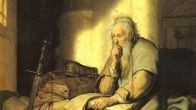
Lesson 1. The Gospel—the Power of God. A school on “Faith and Confession” that lays an amazingly deep foundation in the Word of God. Charles Capps teaches how to activate the power of God in your life.
For I am not ashamed of the Gospel of Christ, for it is the power of God to salvation for everyone who believes, for the Jew first and also for the Greek. Rom. 1:16
The Apostle Paul says, “I am not ashamed of the Gospel of Christ.” The word
“Gospel” means “good news.”
Paul says, “I am not ashamed of the good news.” Yet I have seen people who were ashamed of the good news. The reason they felt this way was that they had encountered arrogant and haughty people in their lives who taught in such a manner that people simply did not want to listen to them.
I have heard people sometimes say, “I have already heard everything about faith that I wanted to hear.” If that is truly the case, then they have heard all the Word of God they wanted to hear, because the Word of God is filled with faith. Therefore, if you teach the Word of God, you teach faith.
But that is not exactly what the critics meant. They did not like the attitude with which the message of faith was presented to them.
If you want to reach people’s hearts, come down to their level and bring them the message in love.
The same applies to prosperity—it all depends on how you talk about it.
Test it on yourself
This method will help us ministers go back and listen to our recordings so we can hear how our message will be received and what impression it will make on people. Sometimes the Word from the pulpit sounds completely different from what was intended, and the listener misunderstands it.
Paul says, “I am not ashamed of the Good News, for it is the power of God.” The Good News is the power of God. This is the Gospel, and the Gospel includes, of course, faith and prosperity and healing—all leading to salvation.
When Paul said this, he affirmed that the power of God is in His Word.
The Gospel is Good News. It is the power of God for salvation, which includes deliverance, protection, healing, and power.
If you preach the Gospel as the Word of God says, and with the right attitude, people will believe it. But people may turn away and refuse to receive the Word if it is presented incorrectly. Do not “beat” people over the head with the Bible. They are probably bound by religious traditions. Remember yourself when you first heard the Gospel—you acted the same way. We were all in the same boat.
Have the right attitude and be accurate when speaking about Scripture
Whenever you preach about something with an attitude that people cannot accept, you will have problems, even if everything you say is according to Scripture.
“…sweetness of speech adds persuasiveness to instruction” (Prov. 16:21). The Gospel, the Good News, is the power of God, but sometimes people turn the Good News into bad news.
For example, they take one of the strongest passages of Scripture on healing and turn it into bad news. Remember what Jesus answered the apostle Paul when he prayed and asked God to remove the thorn in his flesh. Jesus answered, “…My grace is sufficient for you” (2 Cor. 12:9).
Rightly Dividing the Word
I have heard people say, “God did not intend to heal Paul.” But Jesus said, “Paul, My grace is sufficient for you.”
Grace is God's will. And this passage of Scripture is one of the most powerful passages on healing and deliverance. But first, you need to understand that the thorn Paul had was not a sickness at all. Paul calls it a messenger of Satan.
And lest I should be exalted above measure by the abundance of the revelations, a thorn in the flesh was given to me, a messenger of Satan to buffet me, lest I should be exalted above measure.
Three times I pleaded with the Lord that it might depart from me.
But [the Lord] said to me, “My grace is sufficient for you, for My strength is made perfect in weakness.” Therefore I will most gladly boast in my weaknesses, that the power of Christ may rest upon me.
Therefore I take pleasure in weaknesses, in insults, in hardships, in persecutions, in difficulties, for Christ's sake. For when I am weak, then I am strong. 2 Cor. 12:7–10
The Lord was telling Paul, “Use My grace.” And God had to say this three times before Paul understood it. God was not going to remove the thorn; Paul himself had to do that by using God's grace. Paul personally had to resist the devil, and he did. The final two verses of the book of Acts show that Paul did indeed get rid of this thorn in the flesh.
And Paul lived there for two whole years at his own expense and welcomed all who came to him,
preaching the Kingdom of God and teaching about the Lord Jesus Christ with all boldness and without hindrance. Acts 28:30–31
The Gospel is the power of God, and it is Good News. Yet there are people who try to turn the Good News into bad news. I have met people who were afraid of the prosperity message.
But prosperity is one of the principles of the Bible. The Word of God is filled with passages about prosperity, which is part of salvation.
The word “salvation” comes from the Greek word sozo and means deliverance, protection, healing, and power. I am convinced that the essence of this word includes complete prosperity for the spirit, soul, and body.
With this understanding, let us turn to Hebrews 11:1.
Faith brings things into reality; hope sets goals
Now faith is the substance of things hoped for and the assurance of things not seen.
Paul says that faith is…. Notice that faith “is,” not was or will be; it is in the present tense.
Faith, which is the substance of things hoped for, always exists right now, in the present tense.
If faith does not “exist” right now, then it is not faith. If we speak about faith in anything other than the present tense, then it is not the substance of things hoped for.
Hope always implies the future.
This is precisely where many people go astray: they confuse faith with hope.
They say, “Well, I believe that God is going to do this someday.”
But God has already done everything He intended to do for your healing. He has already done everything necessary concerning your finances.
God’s promise has already been spoken. God’s will is His Word, and His Word is His will. The New Covenant is God’s last will and testament and Jesus’ covenant. God has already approved His covenant. The issue is not what He is going to do someday; it is our ability to receive what He has already done.
God could have created the world however He wanted. He could have created the earth and said, “Let the world be whatever we feel it should be.” Every time you woke up in the morning, the world would be exactly as you felt it should be.
The Law of Faith
Faith is a law—the law of God. Paul mentions this in Romans, chapter 3.
Where, then, is boasting? It is excluded. By what law? By the law of works?
No, but by the law of faith. Rom. 3:27
He says that we cannot boast that our sins have been forgiven, because this is something we receive by faith.
Under the Old Covenant, the law was the law of works, but under the New Covenant, it is the law of faith. Therefore, faith is the law of the New Covenant.
Under the law of works of the Old Covenant, people were made righteous. But under the New Covenant, righteousness is not by works, but by faith. It comes through the law of faith.
Do we then make void the law through faith? Certainly not! On the contrary, we establish the law. Rom. 3:31
Which law, according to Paul, do we establish? The law of faith. I believe he is speaking about the same law in chapter 8 of Romans.
For to be carnally minded is death, but to be spiritually minded is life and peace,
Because the carnal mind is enmity against God; for it is not subject to the law of God, nor indeed can be. Rom. 8:6–7
The carnal mind cannot operate according to the law of God. I believe that the law of God is the law of faith. It is like God’s law of gravity. And it works. It does not matter whether you believe in it or not—the law of gravity works; it is always in force. The law of faith also always works.
The question is whether it operates in the lives of some people or not.
The law of gravity is mandatory, while the law of faith is a matter of choice. But God teaches us how to use it. This law will operate only if it is applied correctly. It will not work according to our ways.
Faith in the Heart
Notice that Romans 8:7 says that the carnal mind is hostile to God because such people do not submit to the law of God. Indeed, this cannot be so. The carnal mind cannot be guided by the law of God.
Faith operates in the heart. We need to understand that faith is a spiritual force operating in a person’s heart, not in their mind. Inner agreement takes place in the mind, and people often mistake such agreement for faith, although it is not faith.
The inner voice says, “Yes, the Bible speaks about this,” but in reality, it does not believe it. If this happens only at the level of the mind, then in reality you do not believe it. The inner voice says, “Yes, this is true because the Bible says so.”
But is this the truth of your life?
“Well, not exactly…”
Then it is all only at the level of the mind, not the spirit.
If you have faith in God, it will become a reality. But this must take place in the spirit (heart).
Faith Will Not Work in the Mind
People often get into trouble trying to act by mental faith. They think all they need to do is say aloud what they want. They say: “Mark 11:23 says that I will have whatever I say. So I’ll just start declaring what I need or want.”
Here is an example. One man said to my friend: “I’m telling you, this teaching on confession doesn’t work!” My friend asked: “What makes you say that?” He replied: “I confessed 300 times a day that I had a new car, but I still have the same old car!”
Now you can see that all he had was a formula. He thought it was some kind of incantation—if you said it, a new car would automatically appear in your garage.
No, faith does not work that way at all. This man was misapplying the faith described in Scripture. He was trying to come up with a formula while completely missing the principle of faith. Faith will work if it develops.
This is where many people miss it. Just because you believe in Scripture does not mean that the promise must be fulfilled in your life. You need to develop in faith regarding that promise. Again, simply finding something in the Bible does not mean that you believe it, just as simply saying:
“I believe in Scripture” is not enough to make it the truth of your life.
…faith is the substance of things hoped for…. You hope that the promise will be fulfilled. We all hope that God's promises, such as healing, financial prosperity, and other gifts, will be fulfilled in our lives.
But hope cannot fulfill the promise. Nevertheless, it is very necessary, because without hope we would have nothing for faith to bring into reality.
When people come to have someone pray for their healing, they have hope within them. But hope will not heal them, because hope does not contain the substance of healing. Still, if they had no hope, they would not have come.
Many lose hope and then faith, because faith is the substance of things hoped for (what we hope for). They give up too quickly.
Development Takes Time
I had been an airplane pilot for more than 30 years. And it did not happen spontaneously. I did not wake up one morning and think: “I believe in airplanes; perhaps I can fly one.”
It took me a long time to become a pilot. I didn’t wake up one morning and say to myself, “Yes, I believe airplanes can fly. I believe I can fly in one.”
I spent time developing my skills in this area. I had to learn how to fly an airplane, and the journey was full of trials and errors. But while I was learning, I always had an instructor (assistant) beside me. He helped me handle various situations. With his help, I learned what works and how it works.
No matter who you are, when you decide to grow in faith, you will have to develop. You will begin growing in faith right where you are and continue developing from that point onward.
It will take a long time to develop your faith. You will learn what works and how it works. In time, you will understand what weakens your faith and what, on the contrary, strengthens it.
Faith Will Come
There are few shortcuts in faith. However, there are some that will help you grow in faith to a greater degree. If you use them correctly, the spiritual power within you will strengthen it. For example, declaring the Word of God promotes the growth of faith.
Remember what Paul said:
So then faith comes by hearing, and hearing by the Word of God. Romans 10:17
The Holy Spirit speaks to us through Paul about faith in God and His Word. He says that faith comes by hearing the Word of God. Therefore, we need to speak the Word of God aloud in order to hear it. You cannot hear what is not spoken aloud.
I am convinced that Paul meant for us to hear our own voices as we repeat what God has said to us. Surely, you will have more faith from what you say yourself than from what someone else tells you. God created us this way.
Hebrews 11:1 says that faith is the substance of things hoped for. Faith is the assurance of things not seen. We assumed that we could believe in what we see, but the Bible gives us a completely different definition of faith.
Faith Sees Through the Storm
You have surely heard the old saying that seeing is believing. I do not think we can agree with that. The Bible clearly says that believing is seeing.
Someone may call such faith “blind faith.”
But true faith cannot be blind. Faith always knows. Faith always sees. Faith can look through the storm and see its end. Faith always speaks of the coming final outcome, not of the reality that already exists.
Faith is like an aircraft radar. If it is switched on when you are approaching a storm, the radar screen will begin to flash and will look very much like a television. The storm indicators on the radar will show you where the storm is at its peak and how to avoid it. This radar can see through the storm and tell you exactly how many miles you need to fly in the other direction to avoid it.
With the help of radar, I was even able to fly through very large-scale storms. It seemed to me that they would never end, but the radar clearly showed me the way, and I followed it. I could not see anything through the windshield, but with the help of radar, I could see, in a sense, through the storm.
Faith knows
That is how faith operates, and it is not blind faith at all. Faith always sees and always knows. When people say that faith is blind, they are merely assuming—and assumption is blind. What some people call faith is not faith at all, but recklessness. They simply assume that something may happen, not because they believe in God, but because it once happened to someone else.
Some people take action thinking that faith is guiding them, when in fact they are simply following someone else’s example. “But one brother gave his car as an offering, and now he has a new one! I’m going to give mine as an offering too.”
Yes, do that, and you will be walking for the next few years!
Never base your faith on what someone else has done. Do not justify what you are going to do by someone else’s faith.
Act according to the Word of God, without relying on someone else’s actions
You need to hear from God. You see, God may have told one brother to do this or that. But did He tell you to do the same thing? When you begin to think about it
From this, you will understand why many people call such actions “mistakes of faith.” It was not faith at all. They did it because someone else did it or because someone received a blessing. This is the difference when you do something because the Word of God says so.
If God makes His Word come alive in some area of your life, if He stirs your spirit to do something, you will definitely succeed. You will be filled with faith from the Word of God. Faith always sees. It is like radar—it sees through the storm. It knows what the outcome will be. To believe means to see through faith.
Now faith is the substance of things hoped for.… Sometimes people take everything too literally and tell me that I teach people how to receive material things from God.
But God Himself tells us through Scripture what He has prepared for us.
As His divine power has given us everything we need for life and godliness, through the knowledge of Him who called us by His glory and goodness. 2 Peter 1:3
Leave nothing unsaid
Sometimes it is very difficult for us to imagine this, but there are people who think this way: “Well, the Bible says that God has given us everything we need, so I am not stealing at all; I am simply taking what rightfully belongs to me. The Apostle Peter said that everything has been given to us, and if it all belongs to me, I will take everything I need, and I do not have to pay for it.”
You may be surprised, but such people do exist. We should not say this, but we still do: “If you are going to serve, you will have to deal with people like that.”
We often think that people understand what we mean. But never assume or presume; be completely certain. When saying something, say it several times so that you are surely understood. Leave nothing unsaid.
Now faith is the substance of things hoped for and the evidence of things not seen. We believe in what we do not see. I would like to explain this to you with a simple example. Let us take a pulpit made of transparent plastic or Plexiglas. The person who built it did not create it. He used existing materials such as soybean oil, petroleum, and others.
The pulpit exists; it is really there. We can see it. Sometimes this can be difficult if it is very transparent and clean, but it is there. I do not need to believe that it exists. Even when I cannot see it, I can touch it. And if I knock on it, I will hear a particular sound. Using my five senses, I can know exactly where the pulpit is. Why do I need to believe that it exists if I can simply know that it exists? I know it is standing on the stage, and you know it too. Everyone who sees it knows where it is. We do not need to believe this.
God does not issue loans
You believe in what you do not see, rather than in what is obvious.
Someone might object: “But I’m going to believe after I see!”
But God does not grant loans. You must believe first. You might say that you have to pay cash upfront to receive something you desire from God.
You will have to believe first in order to see what you believe. This is what faith is. Faith is like a document confirming ownership. In other words, faith is just as important as what you hope to receive.
To believe means to see in the Spirit what the Word of God promises, even when it has not yet come to pass.
Therefore I tell you, whatever you ask for in prayer, believe that you have received it, and it will be yours. Mark 11:24
What does Jesus mean by “everything”? It is everything you pray for. What you pray for is what you believe and receive.
Prayer based on the Word of God strengthens our faith. But if you speak only about problems, your fear will grow, and faith will leave you.
If we want to remain in and operate by the law of faith, we simply must believe in what we do not yet see in the real world.
And the best way to envision what you desire is to speak it aloud. You simply need to speak words of faith. Speak the promises aloud. God has given us everything we need for life and godliness (2 Peter 1:3).
And it is not about what God is going to do concerning what we believe. Speaking about God’s promise, we often say that we believe God
will do it. But this is not quite the right confession, because God is not going to do it. God has already done it.
The Word of God is filled with faith. Every promise of God contains enough faith for its fulfillment in your life and in the life of every person on this earth.
That is why Paul says that the Good News is the power of God. Only through the Good News and the power of God can we come to know this and grow in faith.
Then faith is evidence. And faith remains until what is expected is fulfilled.
And when it is fulfilled, faith is no longer needed. What was expected will become reality. But until that happens, faith is the only evidence of what you have.
Remember that we are speaking about God’s faith, as He sees it. God wants our faith to rest solely on the Word of God and His promises.
Some say, “What if God does not want to fulfill what I confess?”
Faith and Promise
Let me repeat this again. The faith I am talking about can deal only with what God has promised. Would it be wrong to believe God because of what He has given us or for what He has promised us?
I think that when we do not make use of what God has prepared for us, it grieves His heart. He has made a way for us, and that way is through faith. The Apostle Paul says that the only way into the grace of God is through faith (Ephesians 2:8–9). There is no other way to receive salvation except through faith.
For by grace you have been saved through faith, and this is not from yourselves; it is the gift of God—not by works, so that no one can boast. Ephesians 2:8–9
Thus, we cannot receive anything without faith, and salvation is one of those things. You cannot be born again unless you believe the Word of God.
Faith is the fulfillment of salvation. Someone may say, “If God has given us all this, where is it, then? Why don’t I have it?”
Now faith is the assurance of things hoped for
By faith we understand that the ages were created by the Word of God, so that what is visible came from what is invisible. Hebrews 11:3
The world was created by the Word of God. In other words, we could say it this way: “We understand that the world was created through faith by the Word of God.” This is how God created the world. He spoke the Word, which produced an effect, and everything that exists began to be. God created everything through words.
In the beginning was the Word, and the Word was with God, and the Word was God. He was in the beginning with God.
All things came into being through Him, and without Him nothing came into being that has come into being. John 1:1–3
Without Him—which means without whom? Without the Word. And nothing came into being without the Word. All creation was made by the Word. The Word was with God, and the Word was God. And the Word is still God in every situation.
It may happen that when you quote the Word of God to take authority over a situation, people may judge you, saying that you are merely trying to imagine yourself to be God. Others may become upset. Not everyone likes it when people act like God. But the point is that I am not trying to be God. I am simply conducting myself the way God would conduct Himself in this situation.
Simply speak aloud what God thinks about the situation, regardless of the circumstances. This does not mean that you should ignore them. A little later, we will examine the matter of circumstances in greater detail.
So, faith is the evidence of things not seen. When God created the world, He saw it through the eyes of faith. In the beginning, God created the heavens and the earth. Then we see the earth transformed when God saw the darkness and commanded the light to be.
The Word of God contains faith
What God saw was darkness. And He said, “Let there be light!” God spoke His desire aloud. The Word of God was His desire, and it contained power—spiritual power.
God created the world by His Word. You cannot build without construction materials. Words filled with faith became His material.
And this is very important for us. God filled His words with faith; He used His words, so to speak, as vessels, filling them with faith and spiritual power and moving them into the darkness, saying, “Let there be light!”
Thus, the faith placed in the Word became the cause of the world’s creation and transformation. This is how God produces everything. All the books of the Bible, from Genesis to Revelation, confirm this.
God never creates anything without first speaking it.
This sounds simple and, at the same time, very profound. If you test this in your own life, you will remember that before doing anything, you always talk about it first—sometimes even several times. And this is because we were created that way. Faith is also the ability to understand and grasp the Word of God in our hearts. This brings life to our spirit and spiritual strength to our hearts, which is much stronger than external circumstances. We can take faith from the Word of God, fill our words with it, and use them as vessels to carry faith into the circumstances we are in and influence them.
This is the Good News. This is the power of God. The Gospel is the Good News. It is the power of God for deliverance, protection, healing, and a sound mind. We are talking about God’s faith. We are talking about how to use God’s power to live a victorious life.
We are not going to demand from God something He does not want to give us, as some people think. We want to receive what God has promised in His Word. And we will do this through faith.
End of lesson.
Author: Charles Capps
Source: The book “Faith and Confession.”