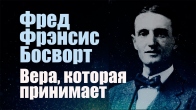
Lesson 9. Christ the Healer. F. F. Bosworth. A Classic on Divine Healing.
“Therefore I tell you: whatever you ask for in prayer, believe that you have received it, and it will be yours!” (Mark. 11:24).
Faith—the title deed
“Faith is the assurance [title deed] of things not seen” (Heb. 11:1). In the Book of Jeremiah, a title deed is often mentioned as evidence. Certain documents are the “assurance,” or evidence, that you own a house. Faith is the title deed to something you do not yet see. When you receive the papers for a house you have not yet seen, you already own that house. Jesus constantly said, “Whoever believes will receive.” Moffatt translated the verse from Hebrews quoted above this way: “Faith means we are certain of what we do not see.”
In the Gospel of Mark (11:24), Jesus commands us to believe that we receive what we have prayed for at the moment we pray, without waiting until we feel or see the answer; on this basis He promises, “It will be yours.” Faith for the healing of your body is the same as faith for forgiveness—it is faith based on the authority of the Word of God, which declares that you are forgiven before you feel forgiven. Everything else is not faith, because faith is “the assurance of things not seen.” As soon as the blessing we receive by faith becomes evident, faith for receiving that blessing ceases.
If your name is mentioned in the will of a wealthy person, you become wealthy from the moment that person dies, although you have not yet seen the money. In the same way, everything bequeathed to us in the Lord’s last will already belongs to us from the moment Jesus, the Testator, died.
As with forgiveness, believing that we received healing at the moment we prayed (before we see or feel healed) is the “confidence” on which we must stand, because it brings a reward. The Holy Spirit speaks of this in Hebrews 10:35. Peter points out that the testing of this faith (faith that we have already received) is more precious than gold.
Believing that our prayers are answered at the moment we pray, and therefore that we already have what we ask for, is the confidence mentioned in 1 John 5:15: “We know that we receive what we ask from Him.”
The fig tree Jesus cursed did not wither in its visible leaves but at its root, hidden from sight. It was impossible to determine immediately that the tree had died by looking at its foliage.
The Decree of Emancipation for All Slaves
Calvary was our emancipation from everything that was not God’s will. We simply need to believe what God has done for us and act accordingly, accepting the freedom purchased by blood just as the slaves of the South did after Abraham Lincoln proclaimed the abolition of slavery. Imagine if the slaves had judged by their feelings: “I don’t feel any different; I don’t see any change; everything around me is exactly as it was.” Would such a judgment have been faith? It became faith only when they began to act according to the freedom that already belonged to them.
In the same way, when we believe the Word of God and act accordingly, everything that belongs to us in Christ immediately becomes available. To accept any testimony that contradicts the Word and prefer it to the Word of God is to nullify the Word, at least as it applies to oneself. Faith is convinced of what God says in the face of contrary testimony from the senses. We must firmly resist doubts and everything opposed to the Word of God. Faith means that we have left the world ruled by the senses.
If a friend deposited one hundred thousand dollars in the bank into your account and brought you your bankbook, you would not rummage through your empty wallet to see how much money you had left; you would look in your bankbook. The Bible is the Christian’s bankbook. God has placed in Christ everything I need. It is already mine. To neglect this is to treat God improperly. The right attitude toward God and His promises will bring their fulfillment to you.
You need to receive Christ before you experience the wonderful results of fellowship with Him. Christ Himself first, then the results. We receive healing, divine life and strength, and every other promised blessing in exactly the same way we received Christ and forgiveness. If forgiveness is invisible, how did you receive it? The answer is: by faith in the Word of God. Why not receive divine healing, life, and power in the same way?
Any blessing received by faith must become yours before you see it—before it becomes evident. Otherwise, it has not been received by faith, which is “the assurance of things not seen.” The ten lepers already had healing in an unmanifested form when they set out for the priest. Their healing manifested when they acted in faith. God’s declaration, “I am the Lord who heals you,” must be received as the voice of God, believed as a present reality, and valued according to its true worth.
The Six Senses
Just as the scent of perfumed water is not perceived by the organs of hearing, so pi what we receive by faith (see Mark 11:24) does not initially exist for our five natural senses. You do not doubt the existence of what you see merely because you cannot smell, taste, or hear it; why, then, doubt the existence of what you receive by faith (the sixth sense) because you cannot yet touch or see it? Our five natural senses belong to the “soulish person,” who, as Paul says, cannot yet know the things of God. Only through our sixth sense—faith—can we see, obtain, and hold on to the blessings God offers us (and this will remain so until they are fully manifested). To turn to our five natural senses for proof that our prayers have been answered is as absurd as trying to see with your ears or hear with your eyes.
All five of our senses function independently of one another: we see what we cannot hear, we hear what we cannot see, and so on. In the same way, by faith you receive what your senses do not perceive at first. It is important to know that contrary sensory evidence is not a reason for doubt, because the testimony on which faith is founded is nevertheless complete. True faith is believing despite evidence from the senses that contradicts it. Abraham received the Word of God and believed it contrary to nature, according to whose laws this was impossible.
You must have perfume in your hands before you can smell it; you must first receive food in order to taste it; you must first receive healing before you can feel it. Faith receives forgiveness and healing and immediately praises God for them, although, if the five human senses are the witnesses, there is still nothing to praise Him for.
Jesus said, “I thank You that You have heard Me,” when Lazarus’s resurrection had not yet been manifested. In the same way, we must believe that our prayer for healing has been heard and say, “I thank You that You have heard me,” even before we see or feel any changes. Before Elisha’s servant saw the angels, they had already arrived at the place. The ability to see them, which God had given him, did not manifest immediately.
God works when we develop the habit of faith within ourselves—“looking not at the things which are seen, but at the things which are not seen”—at God, His promises, His faithfulness, His justice, and so on (2 Cor. 4:18). Faith deals only with what cannot be seen or felt. As soon as what we have received by faith becomes evident to the senses, it ceases to be faith.
The Right Attitude of the Mind
No one who allows their mind to be guided solely by their senses can have victorious faith. The mind living under the direction of the senses remains in a world of uncertainty. Until the Word of God takes authority over your mind, it will be overwhelmed by feelings and by what your eyes see and your ears hear, rather than by the Word of God. The minds and thoughts of those seeking healing must be “renewed” to such an extent that they are in harmony with God's mind, as revealed to us in the Bible and in healing literature. Faith in God's promised blessings results from knowing the Word of God and acting in accordance with it. The right attitude of mind, or a “renewed mind” (Rom. 12:2), makes steadfast faith possible for everyone. God always heals when He can find the right response.
Having Before Seeing
I put a certain amount of money in my wife's coat pocket and then told her about it, asking whether she believed me. She said, “Yes, of course,” and thanked me for it. In fact, she received the money before she saw it. Why do we take people at their word, yet demand visible proof from God?
Continue to believe that God has given you what you asked for in prayer, thanking and praising Him for what He has given, and His gift will surely materialize. Such an attitude always prompts God to act. So many people wait for God to heal them, while God is waiting for them to take what He has already offered them. If a friend offered you a gift you had asked him for with tears, and you made him wait for you to accept it, this would seem very strange to him.
Let us describe this another way. Since Jesus commands us to believe that we have received what we prayed for immediately, before the blessings take visible form, it is clear that blessings have two forms of existence: first invisible, then visible. First, “Believe that you have received” (in invisible form), and “it will be yours” (in visible, or material, form).
At first, we receive them in the realm of faith, and then in the realm of feelings. In the Gospel of Mark (11:24), Jesus commands us to believe that we have received the blessings (in invisible form) as soon as we pray, before He changes them and gives them visible, or material, form. The angels were no less real in their invisible form than when they became visible to Elisha’s servant. The ten lepers received healing in invisible form at the moment they were going to the priest to show their healing in visible form.
When Jesus said, “I thank You that You have heard Me,” Lazarus’s resurrection had already taken place in the realm of faith before it became visible to everyone a few minutes later. We too must believe that we have already received complete healing in invisible form before God gives it visible form. The fact that “faith is the assurance of things not seen” proves to us that we already have what we pray for in invisible form before God transforms it into visible, or manifested, form.
The entire eleventh chapter of Hebrews tells of God’s saints acting in the realm of faith before the results of their prayers took visible form. They all performed acts of faith without immediately seeing visible results. The assurance of receiving what they asked for in prayer is an assurance that must remain firm and unwavering until God transforms these blessings from invisible form into visible form.
Walking by faith means walking with a vision that sees and is occupied with the eternal God, His promises, His faithfulness to us, and many other wonderful grounds for faith. It is by believing in the unseen that
Peter received glorious, inexpressible joy. Nothing he saw could give him such joy as faith in what he had never yet seen.
We offer the sacrifice of praise and thanksgiving in the realm of faith—in other words, before our blessings take visible form. Jonah called the symptoms of manifestation “false gods” and offered a sacrifice while he was still inside the fish. The Israelites sang songs of praise while they were still on their way to battle.
Author: F. F. Bosworth